UPSC Current Affairs September 14, 2026: India Wins Record 8th Women's Asia Cup Title Amid ACC Presentation Standoff | Daily GK Update
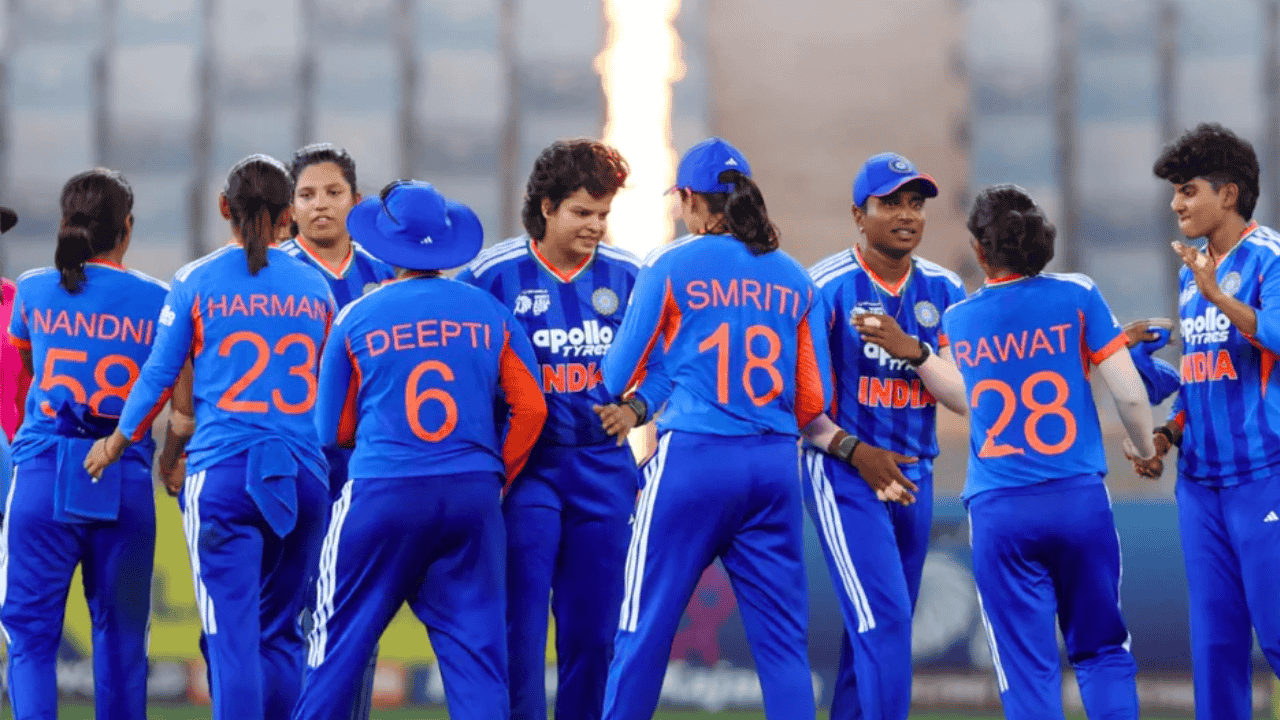
The Indian women's cricket team secured a historic milestone on Sunday by defeating Sri Lanka by 72 runs in the final of the Women's Asia Cup T20 in Dubai, capturing their record-extending eighth continental crown. However, the sporting achievement was immediately accompanied by significant diplomatic reverberations during the post-match ceremony.
Following a 45-minute delay after the match concluded, the Indian squad declined to accept the championship trophy from Asian Cricket Council (ACC) President Mohsin Naqvi, who concurrently serves as the Chairman of the Pakistan Cricket Board (PCB) and the Federal Minister of Interior of Pakistan. The refusal underscores the enduring geopolitical tensions stemming from cross-border military developments and contentious statements regarding Operation Sindoor.
For aspirants monitoring competitive exam news today, this development serves as an intersectional case study linking international sports governance, bilateral diplomacy, and national security policy, frequently covered in the Atharva Examwise Current Affairs curriculum.
Match Summary and Tournament Dominance
Entering the final at the Dubai International Cricket Stadium as firm favorites, the Indian team exhibited comprehensive tactical superiority in both batting and bowling departments.
Having won the toss and elected to bat, India established an imposing platform through a 129-run opening stand between Shafali Verma and Smriti Mandhana. Shafali Verma registered the fastest half-century in Women's Asia Cup history, reaching the milestone in 24 balls before departing for 68. Smriti Mandhana contributed a composed 59, guiding India to a total of 183 for 5 in their 20 overs. In response, Sri Lanka’s batting order collapsed under sustained pressure from the Indian bowling attack, getting bundled out for 111 runs in 19.6 overs. Off-spinner Shree Charani took 4 wickets, while all-rounder Deepti Sharma claimed 3 wickets to seal the 72-run victory.
Key Tournament Facts and Records
The following key data points represent the core factual outcomes from the tournament:
Final Scoreline: India Women 183/5 (20.0 overs) defeated Sri Lanka Women 111 all out (19.6 overs) by 72 runs.
Leading Run-Scorer: Shafali Verma finished as the tournament's highest run-getter with 236 runs across 5 matches at a strike rate of 171.
Leading Wicket-Taker: Deepti Sharma concluded the competition as the leading wicket-taker, securing 14 wickets with an economy rate of 3.84.
Continental Record: India has won 8 out of the 10 Women's Asia Cup editions contested since the inception of the tournament.
Milestone Inning: Shafali Verma’s 24-ball fifty set a new record for the fastest half-century in Women's Asia Cup history.
The overall tournament metrics demonstrate India's consistent individual and team performances across the tournament schedule.
| Player | Role | Key Tournament Statistics | Contextual Significance |
|---|---|---|---|
| Shafali Verma | Opening Batter | 236 runs (5 matches, SR: 171) | Tournament top scorer; fastest fifty in Asia Cup history (24 balls) |
| Smriti Mandhana | Opening Batter | 213 runs (5 matches) | Second-highest run-scorer of the tournament |
| Deepti Sharma | All-Rounder | 14 wickets (Economy: 3.84) | Leading wicket-taker of the competition |
| Shree Charani | Bowler | 12 wickets (4 wickets in the final) | Second-highest wicket-taker; match-winning spell in the final |
Historical Trajectory of the Women's Asia Cup
The Women's Asia Cup was established under the aegis of the Asian Cricket Council to promote cricket development across Asia. The competition was played in the 50-over One Day International (ODI) format from 2004 through 2008, before transitioning permanently to the Twenty20 International (T20I) format in 2012 to reflect broader trends in international cricket schedules.
| Edition | Format | Host Nation | Champion | Runner-Up | Final Margin |
|---|---|---|---|---|---|
| 2004 | ODI | Sri Lanka | India | Sri Lanka | 5–0 bilateral series sweep |
| 2005–06 | ODI | Pakistan | India | Sri Lanka | India won by 107 runs |
| 2006 | ODI | India | India | Sri Lanka | India won by 8 wickets |
| 2008 | ODI | Sri Lanka | India | Sri Lanka | India won by 177 runs |
| 2012 | T20I | China | India | Pakistan | India won by 18 runs |
| 2016 | T20I | Thailand | India | Pakistan | India won by 17 runs |
| 2018 | T20I | Malaysia | Bangladesh | India | Bangladesh won by 3 wickets |
| 2022 | T20I | Bangladesh | India | Sri Lanka | India won by 8 wickets |
| 2024 | T20I | Sri Lanka | Sri Lanka | India | Sri Lanka won by 8 wickets |
| 2026 | T20I | United Arab Emirates | India | Sri Lanka | India won by 72 runs |
Aspirants can access structured compendiums of historical sports data and general knowledge records in the Atharva Examwise Study Material archive.
The Presentation Ceremony Standoff and Diplomatic Backlash
While India's triumph on the field was comprehensive, the presentation ceremony in Dubai was characterized by administrative friction. The proceedings were delayed by 45 minutes as tournament organizers, Board of Control for Cricket in India (BCCI) officials, and Asian Cricket Council executives engaged in deliberations regarding the trophy handover.
ACC President Mohsin Naqvi took the podium to preside over the distribution of awards. Match officials received their commemorative tokens, and the Sri Lankan contingent accepted their runners-up medals and cheque from Naqvi. However, the Indian team, captained by Harmanpreet Kaur, refused to take the stage or accept the winner's trophy from Naqvi. Naqvi remained on the presentation dais for approximately 30 minutes before departing the arena, leaving the championship trophy unpresented. Visuals showed BCCI Secretary Devajit Saikia and Vice-President Rajeev Shukla holding discussions with Indian players prior to the presentation, reinforcing the unified position taken by the administrative board and the squad.
The Geopolitical Context: Operation Sindoor and Precedents
The boycott in Dubai is directly linked to ongoing strategic friction between India and Pakistan. The roots of the protest stem from the security fallout following the Pahalgam terror attack in early 2025, which led to targeted counter-terror military actions by Indian armed forces under "Operation Sindoor". In the aftermath of the military confrontation, Mohsin Naqvi—acting in his official capacity as Pakistan's Interior Minister—issued contentious, adversarial public remarks concerning India.
This rhetoric prompted the BCCI and the Indian government to adopt a strict policy regarding ceremonial interactions. A direct precedent was established during the Men's Asia Cup final on September 28, 2025, when the Indian men's team under Suryakumar Yadav defeated Pakistan but refused to receive the winner's trophy from Naqvi. In that instance, the trophy was transferred directly to the ACC corporate headquarters in Dubai, and the team celebrated on the field without receiving it on stage. BCCI Secretary Devajit Saikia confirmed that the women's team maintained institutional continuity with that precedent, expressing solidarity with the national stance.
Analytical Assessment: Sports Diplomacy and Institutional Conflicts
The Dubai incident provides clear insights into the intersection of geopolitics, sovereign foreign policy, and the administration of international sports organizations.
Dual Roles and the Erosion of Administrative Neutrality
The controversy highlights the administrative friction caused when high-ranking sovereign political officials occupy key executive roles in transnational sports organizations. Mohsin Naqvi's dual role as an active cabinet minister (Pakistan's Interior Minister) and the administrative head of a regional body (President of the ACC) creates a conflict between sovereign accountability and international sporting protocols. In standard diplomatic practice, a state cannot fully decouple an official's ministerial status from their institutional sports role. When an individual holding internal security authority in one country directs hostile rhetoric against another, international protocol interactions cease to be purely ceremonial.
India's Bifurcated Sporting Policy
The standoff illustrates India’s calibrated foreign policy toward sporting relations with Pakistan, which distinguishes between multilateral obligations and bilateral engagements:
Multilateral Compliance: The Indian government and the BCCI maintain participation in multi-nation competitions governed by the International Cricket Council (ICC) and the Asian Cricket Council. This participation prevents disciplinary forfeiture penalties, preserves ranking status, and fulfills international regulatory commitments.
Bilateral Decoupling: India enforces a total suspension of bilateral sporting tours, which is complemented by symbolic on-field actions such as the "no-handshake" protocol established in late 2025 and boycotts of award presentations involving controversial state functionaries.
This balanced approach enables India to maintain institutional compliance in global bodies while asserting sovereign red lines against state figures associated with anti-India rhetoric. Candidates examining foreign policy instruments and regional diplomacy can study these frameworks through the Atharva Examwise NCERT Foundation Course.
Institutional Background: Asian Cricket Council
Understanding the institutional mechanics of the Asian Cricket Council (ACC) is relevant for general administrative and governance studies.
Genesis: The organization was founded as the Asian Cricket Conference on September 19, 1983, in New Delhi, India, with six initial members: India, Pakistan, Sri Lanka, Bangladesh, Malaysia, and Singapore. It was renamed the Asian Cricket Council in 1995.
Administrative Structure: Originally, the council's headquarters rotated biennially alongside the presidency. In 2003, Kuala Lumpur, Malaysia, was designated as the permanent administrative headquarters, with modern regional governance and event operations functioning primarily through its operational offices in Dubai, UAE.
Governance Model: The presidency of the ACC rotates among full member boards on a biennial basis. While this rotating leadership promotes regional representation, it frequently generates administrative gridlock during periods of heightened geopolitical tensions among member states.
Why this matters for your exam preparation
This current affairs development connects directly with several sections of the UPSC Civil Services Examination (CSE) and State Public Service Commission (State PCS) syllabi, including MPPSC, UPPSC, and BPSC:
UPSC General Studies Paper II (GS-II): International Relations and Governance
India and its Neighborhood - Relations: The event provides a clear contemporary case study of how unresolved border disputes, security threats, and targeted military initiatives (such as Operation Sindoor) influence cultural, sporting, and institutional engagements.
The Limits of Track-Two Diplomacy: It demonstrates the constraints of using sports as a tool for soft power diplomacy, illustrating that cultural exchanges cannot function in isolation when underlying state security concerns remain unresolved.
Transnational Governance Vulnerabilities: The incident underscores the structural issues that arise in regional organizations when executive sporting appointments overlap with active ministerial duties in national governments.
UPSC General Studies Paper III (GS-III): Security and Defense Policy
National Security Prioritization: India’s calculated response reflects a policy posture in which national security and defense concerns take precedence over standard ceremonial and sporting conventions on the international stage.
Prelims and General Knowledge (Daily GK Update)
For factual testing across competitive examinations, aspirants must retain the following core facts:
Event Details: Champion (India), Runner-Up (Sri Lanka), and Victory Margin (72 runs) of the 2026 Women's Asia Cup.
Historical Records: India’s total title count (8 titles: 2004, 2005–06, 2006, 2008, 2012, 2016, 2022, 2026).
Statistical Leaders: Shafali Verma (Tournament top scorer: 236 runs; fastest half-century: 24 balls) and Deepti Sharma (Tournament top wicket-taker: 14 wickets).
Institutional Governance: Formation year (1983), foundation venue (New Delhi), operational headquarters (Dubai / Kuala Lumpur), and executive structure of the Asian Cricket Council.
For structured syllabus mapping, concept-first video lectures, and daily exam analysis, visit Atharva Examwise.