
Daily GK Update: Kangra Miniature Painting - UPSC Current Affairs & Art and Culture Guide
Introduction and Historical Origin of Kangra Painting
Kangra miniature painting represents one of the most refined and celebrated branches of the Pahari school of Indian art. Flourishing in the lower Himalayan region of modern-day Himachal Pradesh, this traditional painting style gained prominence during the mid-18th century as the dominance of the earlier Basohli school began to fade.
The historical foundation of the Kangra school is intrinsically linked to political developments in the Gangetic plains during the 18th century. Following the invasion and plunder of Delhi by Nadir Shah in 1739, the resulting instability compelled several Mughal court painters to migrate to the sub-Himalayan hill states to seek royal patronage. These migrating artisans found refuge at Haripur-Guler under the patronage of Raja Govardhan Chand (1744–1773) and his successor Raja Parkash Chand (1773–1790).
At the court of Guler, the technical precision and naturalism of the Mughal miniature tradition synthesized with the serene environment and local devotional ethos of the Himalayas, giving rise to the Early Guler or Early Kangra phase. Master painter Pandit Seu and his sons, Nainsukh and Manaku, played a transformative role in developing this lyrical aesthetic.
The Kangra style reached its artistic zenith under Maharaja Sansar Chand Katoch (1775–1824) of Kangra. An ardent devotee of Lord Krishna, Maharaja Sansar Chand established active art ateliers at Tira-Sujanpur, Alampur, and Nadaun, commissioning hundreds of intricate works that established Kangra art as a hallmark of Indian heritage.
Key Historical Milestones
1739: Nadir Shah invades Delhi, prompting Mughal court artists to migrate to the Punjab hills.
Mid-18th Century (c. 1740–1750 CE): Origin of the Kangra style at Haripur-Guler under Raja Govardhan Chand.
Late 18th Century: Golden period under Maharaja Sansar Chand Katoch.
Key Master Artists: Pandit Seu, Nainsukh, Manaku, Khushala, Purkhoo, and Fatoo.
Artistic Features, Technical Precision, and Natural Colors
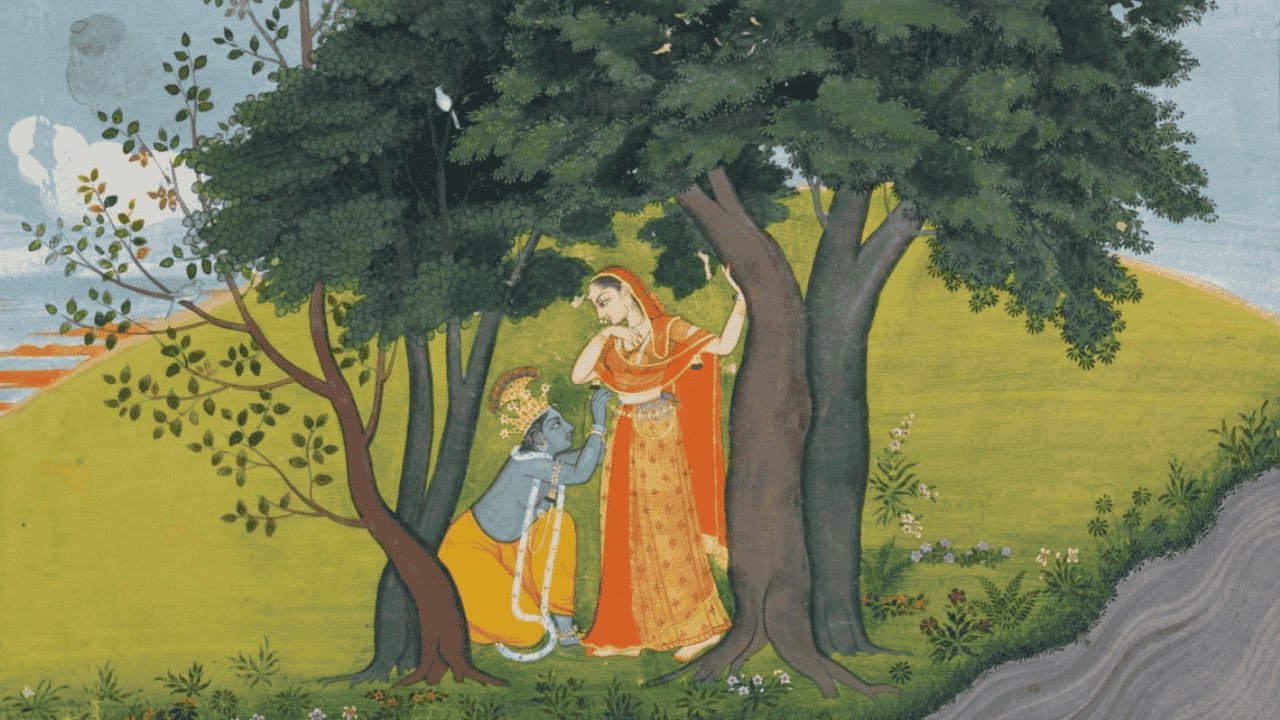
The defining attribute of Kangra miniature painting is its profound engagement with nature and emotional expressiveness (bhava). Unlike formal imperial court portraits, Kangra paintings integrate landscape elements directly into the emotional narrative of the composition.
Kangra Art Characteristics ├── Fine Brushwork : Uses squirrel hair and Turtle Dove quill brushes ├── Natural Pigments: Derived from minerals, plants, gold, silver, and conch shells ├── Ecological Themes: Detailed mountains, rivulets, clouds, and indigenous flora └── Spiritual Themes: Focus on Shringara Rasa, Radha-Krishna, and Bhakti devotion
Artists utilized fine brushes made from the hair of squirrels or the fallen feathers of local migratory birds, such as the Turtle Dove, enabling extremely delicate calligraphic lines and subtle facial modeling. The brushwork conveys soft facial expressions, flowing garments, and delicate physical postures with porcelain-like grace.
A remarkable aspect of Kangra craftsmanship is the exclusive use of natural, eco-friendly pigments derived from mineral ores, plants, and organic materials. Local traditions reference a palette of nineteen pure colors prepared over months, incorporating malachite, lapis lazuli, indigo, madder, crushed conch shells, and pure gold and silver leaf. To preserve paper folios from insect infestation, traditional painters applied Dhuna—a bio-preservative resin generated from slow-burning wood waste.
Exam-Relevant Technical Details
Pigment Sources: Natural extracts from minerals, vegetables, precious stones, indigo, and conch shells.
Preservation Technique: Application of organic Dhuna resin to protect handmade paper against pest decay.
Landscape Motifs: Detailed representations of the Dhauladhar mountains, glacial rivulets, terraced paddy fields, flowering trees, lotus ponds, and storm clouds.
Core Themes and Literary Influences
The thematic core of Kangra painting is anchored in Shringara Rasa (the emotion of romantic and spiritual love) and the medieval Vaishnavite Bhakti movement. The visual stories serve as allegories for the human soul seeking union with the Divine.
Divine Romance of Radha and Krishna: The primary subject matter depicts moments from the lives of Radha and Krishna in Vrindavan, translating devotional poetry into visual form.
Literary Works Illustrated: Master artists created extensive thematic folios illustrating classic Sanskrit and Braj texts, including Jayadeva's Gita Govinda, the Bhagavata Purana, Keshavdas's Rasikapriya and Kavipriya, Bihari's Sat Sai, and Bhanudatta's Rasamanjari.
Baramasa and Ragamala: Baramasa series capture human emotions across the twelve months of the year alongside seasonal changes in nature, while Ragamala sets depict Indian classical musical melodies.
Epics and Folk Narrative: The paintings also illustrate scenes from the Ramayana, the Mahabharata, the romantic legend of Nala and Damayanti, as well as everyday rural and pastoral hill life.
Comparative Matrix: Schools of Pahari Painting
To assist competitive exam aspirants in distinguishing between major sub-schools of Pahari art, the table below outlines structural differences across the Pahari tradition.
| Feature / Attribute | Basohli School | Early Guler Phase | Peak Kangra Style |
|---|---|---|---|
| Active Period | Mid-17th to Early 18th Century | Mid-18th Century (1740s–1770s) | Late 18th to Mid-19th Century |
| Primary Patrons | Raja Kirpal Pal | Raja Govardhan Chand, Raja Parkash Chand | Maharaja Sansar Chand Katoch |
| Key Characteristics | Bold lines, intense primary colors, beetle-wing accents | Naturalistic shading, transitional Mughal-Hill synthesis | Soft cool colors, fluid delicate lines, rich landscape detail |
| Color Usage | Vibrant yellow, deep red, strong primary hues | Soft tones, cool greens and blues | 19 natural mineral/vegetable dyes, enamel-like luster |
| Primary Themes | Rasamanjari, mythological icons | Transition toward Vaishnavite poetry | Gita Govinda, Bhagavata Purana, Baramasa, Nayika-Bheda [cite: 3, 4, 5] |
Geographical Indication (GI) Tag and Global Recognition
In the late 19th and 20th centuries, Kangra art experienced a decline due to the loss of royal patronage, urbanization, and the scarcity of traditional natural materials. To protect the heritage value of the art form and support local artisans in Himachal Pradesh, Kangra painting was awarded the Geographical Indication (GI) Tag on April 2, 2012, under the Geographical Indication of Goods (Registration and Protection) Act, 1999.
The GI tag ensures that only certified handmade miniatures produced in the designated region using traditional techniques receive official authenticity status.
Kangra art also plays a significant role in India's cultural diplomacy. During the 2022 G20 Bali Summit, an authentic Kangra miniature painting was presented by the Prime Minister of India to the President of the United States, highlighting its status as an international cultural symbol. Today, major masterworks are preserved in institutions such as the Maharaja Sansar Chand Museum adjoining Kangra Fort, the Rietberg Museum in Zurich, the British Museum in London, and the Boston Museum of Fine Arts.
Related Links and Reference Material
Atharva Examwise Internal Resources
Atharva Examwise Daily GK Update: Art and Culture Special
UPSC Current Affairs: Comprehensive Notes on Indian Visual Arts
Atharva Examwise Current News: GI Tags and Intellectual Property Rights Guide
Credible External References
Centre for Cultural Resources and Training (CCRT) - Indian Art Forms
Official Portal of Kangra District Administration - Art Archives
Intellectual Property India - Geographical Indications Registry
Why this matters for your exam preparation
For candidates preparing for the UPSC Civil Services Examination (CSE), State PSCs, and other competitive examinations, Kangra miniature painting represents a high-yield topic within the Indian Art and Culture syllabus.
1. UPSC Civil Services Preliminary Examination (GS Paper 1)
Visual Arts & Painting Schools: Questions frequently evaluate direct factual knowledge regarding sub-schools of Pahari art, patron kings (such as Maharaja Sansar Chand), master painters (Nainsukh, Manaku), and structural differences between Basohli and Kangra styles.
Geographical Indications (GI Tags): Prelims questions regularly cover intellectual property rights, GI-tagged traditional crafts, and their corresponding states of origin (e.g., Kangra Painting - Himachal Pradesh, GI Tagged in 2012).
Medieval and Early Modern History: Understanding the impact of external geopolitical events, such as Nadir Shah’s 1739 invasion of Delhi, on regional art migration provides context for history MCQs.
2. UPSC Civil Services Main Examination (GS Paper 1 & Essay)
Cultural Synthesis and Migration: Mains prompts often require analytical responses regarding how migration and patronage fostered regional art forms during the 18th century.
Integration of Literature and Art: Candidates can highlight Kangra art as a key case study showing how Sanskrit and Braj literature (Gita Govinda, Rasikapriya, Bhagavata Purana) translated into visual mediums.
Preservation of Indigenous Knowledge & Diplomacy: Soft-power assets, such as cultural gifts at international summits (e.g., G20 Bali Summit) and heritage conservation efforts, serve as effective examples in answers concerning India's soft power, GI protection, and rural artisan livelihoods.